

A real budget breakdown for couples planning across two cultures.
Published 2024 · Figures reflect post-pandemic pricing across the German events market.
If you’ve asked three different vendors in Nordrhein-Westfalen “what will my wedding cost?” and got three very different answers, you’re not imagining things and you’re certainly not doing anything wrong. You’re simply running into a gap that almost nobody addresses out loud: the standard German wedding budget guide was never built with an African wedding in mind.

As planners who have walked this road with couples since 2015, we hear the same worry in almost every first consultation. It isn’t “can we afford a wedding” it’s “why does ours seem to cost so much more than the number I read online?” That question deserves an honest, specific answer, not a generic average. So this is our attempt at one: a transparent look at what a wedding actually costs when it authentically honors both German logistics and African tradition, using research and vendor pricing gathered in 2024.
A quiet note before we dive in, because it matters to us: nothing here is meant to make your celebration feel like a spreadsheet. Budgeting well is what protects the joy. It’s how you get to be fully present on the day, instead of quietly doing math in your head during the first dance.
Why 2024, specifically
Wedding pricing across Germany moved a great deal after the pandemic years. Venues, caterers, florists and entertainers absorbed several years of rising energy, food and labor costs at once, and couples returning to full-scale celebrations met a market that looked nothing like it did in 2019. The figures in this guide reflect that recalibrated, post-lock down reality. Not pre-2020 pricing you may still see quoted online.
1. The German Baseline: What NRW Vendors Are Actually Charging
Before we can talk about what an African wedding adds, we need an honest starting point: what does a standard German wedding cost in this region right now? Industry surveys put the 2024 German national average at roughly €15,450 per couple. Which is about 8% higher than the year before, which tells you how sharply post-pandemic costs have climbed. In Nordrhein-Westfalen specifically, couples planning a full celebration with 60–100 guests are typically landing between €14,000 and €20,000 once venue, catering, drinks, photography and entertainment are all accounted for.
“The venue and catering line together usually swallow half of the total budget — everything else is negotiated around what’s left.”
German baseline, per guest (NRW average, 2024)
| Cost item 2024 NRW range |
| Venue hire only €2,000 – €6,000 (flat, not per guest) |
| Venue + catering + drinks package €75 – €200 per guest |
| Full wedding, 60–100 guests, all vendors €14,000 – €20,000 total |
| Standesamt (civil registration) €65 – €200 |
This is the number most couples find when they search in German. It’s a genuinely useful starting point and it’s also, for most of our clients, only about two-thirds of the real picture.

2. Why the German Average Doesn’t Fit an African Wedding.
This isn’t about African weddings being extravagant. It’s about structure. A German wedding budget guide assumes one ceremony, one reception, one guest list, and one culturally homogeneous set of expectations around food, dress and entertainment. Most of the African couples and families we work with; Nigerian, Ghanaian, Cameroonian, Congolese, Angola, Equatorial Guinea and even the Philippines and Bahamas and many blended households besides are planning something structurally different. Often two full celebrations (a traditional or introduction ceremony and a white wedding), a guest list shaped by extended family and community rather than a fixed headcount, and cultural elements that German vendors simply don’t stock, quote, or know how to price. We think of this as a layer of genuine, necessary complexity sitting on top of the German baseline and not an inflated version of it. Naming that layer honestly, line by line, is the only way to budget for it properly instead of discovering it three weeks before the big day.
3. The Real Add-On Costs, Line by Line.
Here is where honest budgeting happens. Below are the categories that most consistently surprise couples either because a German-only budget guide never mentions them, or because the German market average simply doesn’t apply to how these elements work in an African context.
a) A second ceremony, not a second afternoon:
For many families, the traditional or introduction ceremony is not optional and not a small pre-party. It is its own full event, with its own venue hire, catering, attire and often its own guest list. Budgeting for “a wedding” when you are actually funding two distinct celebrations is the single biggest source of shock we see. Plan for it as two line-item budgets from day one, even if the second is more modest in scale.
b) Aso-ebi and coordinated family attire:
Coordinated fabric for close family and friend groups is a cultural cornerstone, not a styling flourish and it carries a real cost that a German bridal budget line simply has no equivalent for: fabric sourcing (often imported), tailoring, and coordination across multiple family groups. Guests typically cover their own aso-ebi, but couples and immediate family commonly underestimate what their own sets, gele, and accessories will add to the personal budget.
c) Catering that goes beyond the standard German buffet package:
Most NRW venue catering packages are priced around a European buffet or plated menu at roughly €60–90 per person. Authentic West or Central African catering; jollof, egusi, suya, specialty proteins, imported spices and the volume of food culturally expected at a celebration is rarely included in a venue’s house package. It usually means bringing in an external caterer, which can mean an additional kitchen fee from the venue on top of the catering cost itself. Always ask a prospective venue directly whether outside catering is permitted, and what the corkage or kitchen-use fee is before you fall in love with the space.
d) Entertainment that bridges two audiences:
A German DJ package alone often isn’t enough when the guest list spans generations and continents. Many couples budget for both a DJ fluent in Afrobeats, Highlife or Amapiano and a live cultural element drummers, a praise singer, or an MC who can move comfortably between German, English and a home language. This dual entertainment need is one of the most consistently under-budgeted lines we see.
e) Décor that transforms rather than decorates:
Many of the halls available to book in NRW are plain, function-style rooms rather than pre-decorated venues which is actually good financial news if you plan for it. Transforming a neutral hall with pipe-and-drape, lighting and color is almost always significantly cheaper than booking a venue that comes “pre-styled” in a look that doesn’t reflect your culture anyway. We cover exactly how to do this well, with real savings figures, in our separate downloadable guide on hall transformation.
f) Travel, accommodation and diaspora logistics
When family is flying in from Lagos, Accra, London or Houston, accommodation blocks, airport transfers and sometimes contributing toward flights for elders become part of the real budget. Even when they never appear on a vendor invoice. This is a family-side cost, but it is a wedding cost, and couples who plan for it from month one feel far less ambushed by it in month eleven.
g) Photography and videography, twice over:
Two ceremonies usually means two full days of coverage, not one package stretched thin. Confirm early whether your photographer and videographer price multi-day, multi-outfit African weddings as a single package or as two separate bookings, the difference can be substantial.
4. A Real Budget Breakdown: Illustrative 2024 Ranges.
Every wedding is different, so treat the table below as an honest planning range rather than a fixed quote. It’s built from 2024 NRW vendor pricing plus the add-on categories above, for a celebration with a traditional ceremony and a white wedding, roughly 100–150 guests combined.
| Budget category Modest end Fuller celebration |
| Venue hire (both ceremonies) €3,000 €7,500 |
| Catering & drinks (incl. external caterer/kitchen fee) €6,500 €14,000 |
| Aso-ebi, attire & family fabric coordination €1,500 €4,500 |
| Décor & hall transformation €2,000 €6,000 |
| Entertainment (DJ + live/cultural element) €1,800 €4,000 |
| Photography & videography (multi-day) €2,200 €5,000 |
| Officiant, translation & documentation €300 €900 |
| Family travel & accommodation contribution €1,500 €6,000 |
| Planner / coordination fee €1,200 €3,500 |
| Total realistic range €20,000 €51,400 |
Notice that even the “modest end” column sits above the standard German average from Section 1 that gap is the honest cost of the two-ceremony, dual-culture structure, not a sign that anyone is overspending.
The number that actually matters
Don’t anchor to a total. Anchor to a per-category range, decide which three or four lines matter most to you and your families, and give yourself permission to spend generously there while trimming elsewhere. That’s a far more useful budgeting tool than any single average, ours included.
5. Where Couples Genuinely Save, Without Losing the Culture.
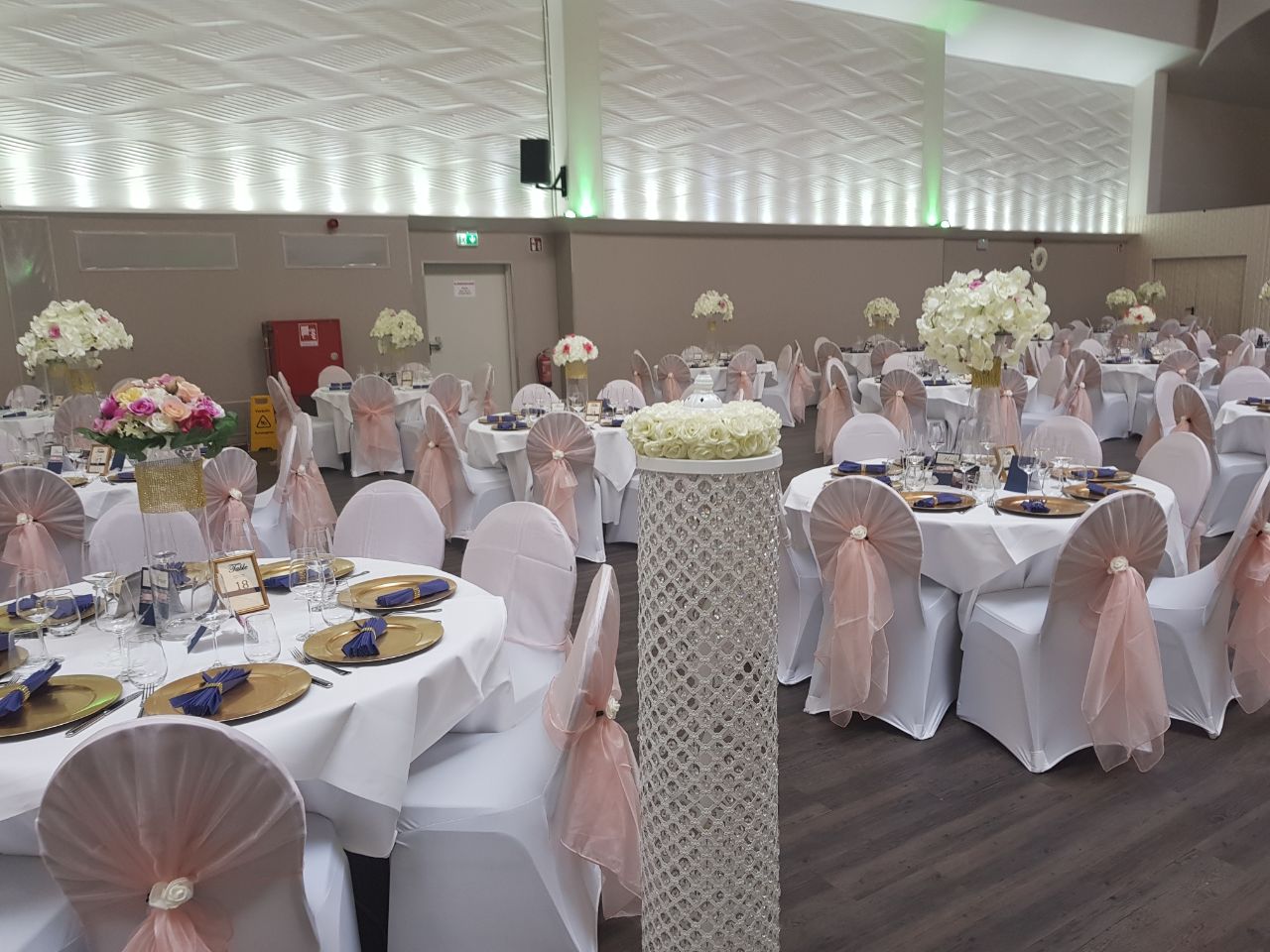
● Choose a plain hall over a pre-decorated venue. A neutral NRW function room with pipe-and-drape and lighting almost always costs less overall than a venue that comes styled in a look you’ll pay to override anyway.
● Get the outside-catering question answered in writing before booking a venue. A venue that welcomes your caterer at a fair kitchen fee is worth more than one with a lower rental rate but a restrictive in-house-only policy.
● Book a Friday or an off-season date. The same 10–20% seasonal and weekday savings that apply to German weddings apply here too, and they stack meaningfully across a two-ceremony budget.
● Negotiate multi-day packages with photographers and videographers up front. Vendors who understand African weddings often have a two-ceremony rate that’s considerably better than two separate bookings.
● Separate “family contribution” logistics from the vendor budget early. Travel and accommodation for elders is real money. Plan it as its own line so it never quietly eats into what you meant for décor or catering.
The goal of this breakdown was never to hand you a number. It was to hand you clarity. A wedding that honors where you come from and where you’re building your life now doesn’t have to be a financial mystery. It just needs a budget built for what it actually is.
Let’s build your real budget together
 .
.
Calvary Wedding & Event Designers Germany has planned African and multicultural celebrations across NRW since 2015. Book a consultation and we’ll map your two-ceremony budget, line by line, before you sign a single vendor contract.
Sources & methodology: figures compiled from 2024 German wedding-industry market surveys (national and NRW-specific), regional venue and catering pricing pages, and diaspora wedding-cost reporting on aso-ebi, traditional-ceremony and entertainment costs. Ranges are planning estimates, not quotes — always confirm current p
Hallo, dies ist ein Kommentar.
Um mit dem Freischalten, Bearbeiten und Löschen von Kommentaren zu beginnen, besuche bitte die Kommentare-Ansicht im Dashboard.
Die Avatare der Kommentatoren kommen von Gravatar.